As ‘5G for All’ becomes a core consensus across the global technology industry, Fixed Wireless Access (FWA) – a key segment for inclusive connectivity – is reshaping the landscape of digital infrastructure development.
Counterpoint Research, a leading research institution with authoritative insights into the global technology ecosystem, anchors the development trends of 5G and FWA through in-depth industry perspectives.
Meanwhile, ZTE has emerged as a core enabler of inclusive connectivity, backed by its robust strength of securing five consecutive years of No.1 global market share in 5G FWA & MBB.
In this exclusive dialogue hosted by Counterpoint Research, Mr Zhou Jinxing, Vice President of ZTE, General Manager of Mobile Internet, ZTE Mobile Devices, shares in-depth insights focusing on the core topics of FWA technology evolution and universal 5G adoption, jointly exploring new pathways and possibilities for global digital inclusion.

Q1: For home broadband, why are operators choosing 5G FWA today? What are the biggest advantages and challenges in scaling up this service?
The core reason for operators to adopt 5G FWA lies in the low FTTH penetration rate in certain countries. In many regions, fixed broadband coverage is either non-existent or still dependent on outdated copper-based technologies. Notably, these areas already have fully built 5G networks with low network load. In this context, 5G FWA has essentially become a "killer application" in some regions, serving as a fast and cost-efficient solution to deliver internet access, while also complementing operators' future FTTH deployment plans.
The primary challenges in scaling up 5G FWA services are the rising network load as the number of subscribers grows and the poor penetration of 5G signals through walls. To address these issues, enhanced 5G FWA CPEs are needed, featuring more intelligent antenna performance to elevate service QoS.
Q2: What are ZTE's latest 5G FWA offerings? How do these solutions outperform those from other vendors?
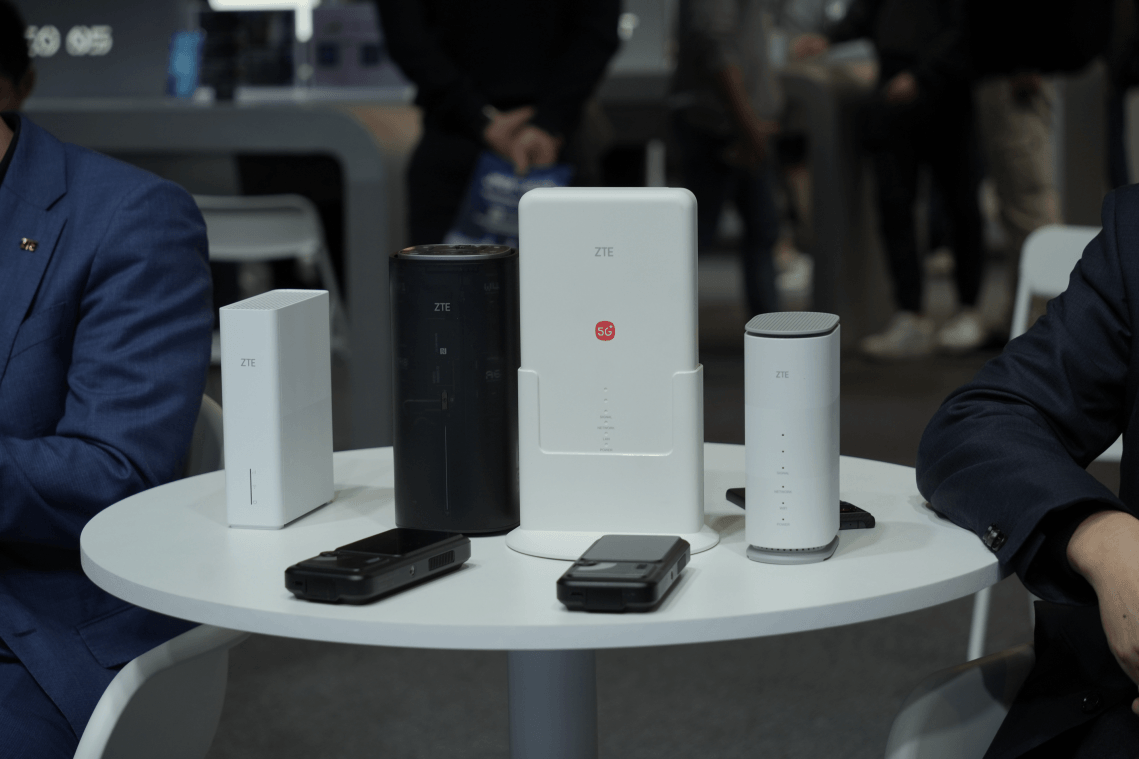
Upholding our "5G for All" strategy, ZTE offers a comprehensive portfolio of 5G FWA terminals from entry-level devices to flagship products,covering R15, R16, R17 and R18 standards as well as models supporting different Wi-Fi protocols, catering to person, vehicle and home scenarios, serving both individual consumers and industrial customers.
ZTE offers a comprehensive portfolio of 5G FWA terminals, covering R15, R16, R17 and R18 standards as well as models supporting different Wi-Fi protocols. This diverse lineup caters to the varied service development needs of global operators and drives their business growth.
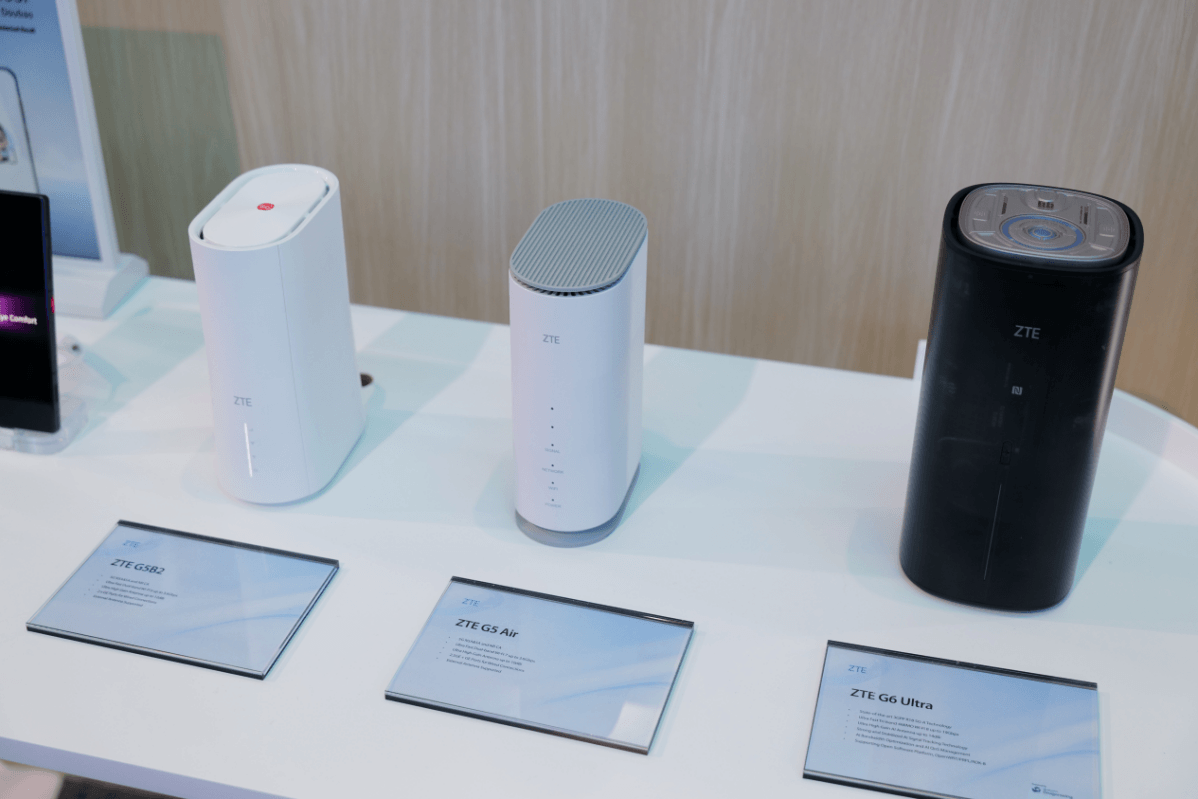
The ZTE G6 Ultra redefines indoor connectivity standards as the world's first 5G-A AI Wi-Fi 8 ready CPE, which integrates AI technology with Tri-band 4MIMO Wi-Fi 8. Leveraging the R18 5G-A standard, 400MHz bandwidth and advanced 6CC carrier aggregation, the device achieves a peak speed of 10Gbps. Equipped with ZTE's 6th Gen Indoor AI Antenna Solution boasting a 14dBi gain, plus the latest AI Signal Tracking and Beam Scanning Algorithm 6.0, it boosts download speeds by 30% and expands coverage by 20%. Additionally, ZTE's unique AI Dynamic Bandwidth Technology can intelligently identify over 4,000 mainstream applications, increasing bandwidth efficiency by 20%, while reducing latency by 50% and network congestion by 30%. All these features make it the perfect choice for 8K video streaming and VR gaming scenarios.
Q3: How is ZTE leveraging AI to enhance the 5G FWA user experience? Is the AI technology deployed on the router, in the cloud, or both? What AI features are the most critical for home broadband at present?
Guided by our GIS product philosophy, which stand for Green, artificial Intelligence, and security, which integrates AI-driven technologies to optimize network performance.
ZTE‘s AI solutions address various aspects of the 5G FWA experience, with some functions fully implemented on local devices and others supported by edge-cloud synergy.
A standout feature is AI-powered intelligent bandwidth control: the system automatically identifies different types of applications and dynamically allocates bandwidth resources accordingly. This ensures a smooth experience for users when accessing their core services, effectively improving overall QoS, boosting user satisfaction and reducing customer churn.
ZTE is also the first FWA vendor to propose upgrading from the traditional Graphical User Interface (GUI) to a Language User Interface (LUI). This innovation allows users to control and manage CPEs through natural language interactions, eliminating the need for complex operations on mobile or web apps, which is a typical example of AI driving user experience enhancement.
For current home broadband products, we believe the top priority is to leverage AI to optimize CPE performance and elevate the end-user experience. This approach enables service providers to precisely address customer pain points.
Q4: Currently, the market is facing key challenges such as complex device installation and frequent home Wi-Fi disruptions. How do ZTE's solutions tackle these issues?
ZTE has been consistently analyzing the core pain points throughout the entire FWA user journey. By collaborating closely with hundreds of global operators, we continue to lower the barrier of device setup and operation through optimized hardware and software design.
The integration of AI further enables the LUI experience, allowing users to voice their connectivity issues in natural language. The built-in AI model can accurately understand user inquiries and provide targeted solutions: for simple problems, it can suggest basic troubleshooting steps such as adjusting the CPE's placement at home; for more complex issues, it can recommend upgrading broadband packages or arranging on-site technician support. This creates a seamless AI-driven user service experience.
Q5: What remote support and device management solutions does ZTE provide for operators?
ZTE offers the Smart Cloud Platform (SCP) for professional remote device management. As an open, integrated and flexible platform, ZTE's SCP enables accurate fault localization in the access network, significantly reducing operators' operational expenditure (OPEX).
Within the home network, ZTE's software supports unified management of a wide range of terminal devices including FTTH ONTs, mesh APs, FTTR and mobile broadband devices, complying with TR069/TR369 and MQTT protocols. We also support seamless integration with the third-party network management systems (NMS) already in use by operators, ensuring compatibility and ease of deployment.
To date, ZTE's SCP has been deployed globally, managing more than 10 million terminal devices for our partners.
Q6: What is the roadmap for ZTE's FWA solutions? Will Wi-Fi 8 be adopted early, or is Wi-Fi 7 sufficient for the current market? Will the focus be more on software and AI optimization rather than hardware upgrades?
ZTE is committed to R&D and adoption of the latest communication technologies, ensuring that cutting-edge standards are brought to consumers as early as possible. Our current focus is on the large-scale rollout and optimization of Wi-Fi 7 technology. We predict that commercial Wi-Fi 8 deployments will start gradually by the end of 2027.
As mentioned, our top priority is to optimize product performance – this includes upgrading high-gain smart antennas and refining software operation systems. We are particularly focused on enhancing QoS by deepening AI integration into our CPE products, combining both hardware and software innovation.
Q7: What key advice or takeaways would ZTE like to share with operators?
Operators should prioritize the enhancement of user experience and terminal performance. ZTE is ready to collaborate closely with them in this effort. This goal needs to be achieved through a combination of hardware upgrades and software optimization, and we are willing to work with operators to identify specific improvement areas based on their actual business needs. As operators advance their network and service upgrades, ZTE will continue to deliver industry-leading products, superior performance and an exceptional user experience to every end customer.